
A facility can be built exactly to a mission-critical blueprint, with every redundant system specified correctly on paper, and still fail the first time something actually goes wrong. The blueprint describes what the building is supposed to do. Whether it actually does it is a separate question, and the only way to answer that question honestly is to deliberately try to break the building before a tenant ever moves in.
A New Market Means Tenants Can’t Lean on an Operator’s Track Record Alone
Choosing a data centre in Indonesia tenant has to evaluate carries a particular wrinkle in a market where large-scale hyperscale campuses are still relatively new. In an established market, a tenant can lean partly on an operator’s history, how its other facilities have performed over years of operation, as a proxy for how a new site is likely to behave. In a growing market like Indonesia, that history is thinner, which shifts more of the weight onto how the facility was actually tested before handover rather than how similar buildings have performed elsewhere.
That’s not a weakness unique to any one operator, it’s simply a feature of building in a market that’s expanding faster than its own track record can accumulate. The practical response is to make the testing process itself more rigorous and more visible, since it has to carry more of the weight a track record would otherwise provide.
The Label Gets Earned During Commissioning, Not During Design
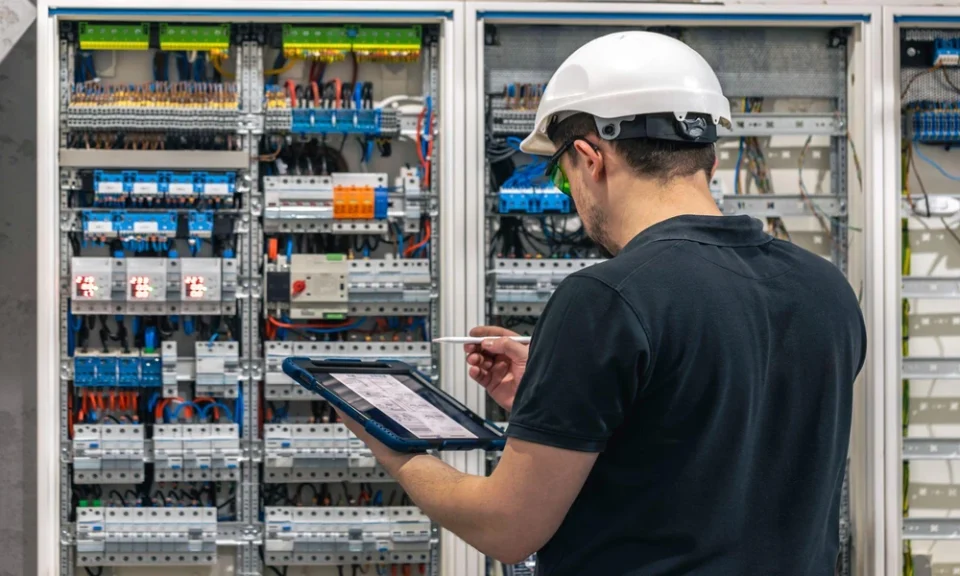
The engineering behind mission-critical facilities gets specified at the design stage, redundant power paths, redundant cooling, concurrent maintainability, but none of it is actually proven until commissioning. Commissioning is where a facility’s systems get tested under conditions that mimic a real failure: a utility feed is deliberately cut to confirm backup generation picks up within spec, a cooling unit is taken offline to confirm the remaining units can carry the full load, a control system is forced to fail over to confirm the handoff happens cleanly. A building that passes on paper and a building that’s been through this process are not the same claim.
What a Pull-the-Plug Test Actually Looks Like
Integrated systems testing, sometimes described informally as a pull-the-plug test, usually happens in stages rather than as a single dramatic event. Individual components get tested first in isolation, then in combination, building toward a full-facility simulation where utility power is cut entirely and the site is left to run on backup systems alone for a sustained period. Anything that doesn’t perform as specified during this process gets identified and corrected before a tenant’s equipment is ever plugged in, which is a considerably better place to find a fault than during a live outage months into occupancy.
The sequencing matters as much as the testing itself. Rushing straight to a full-facility simulation without first clearing each component individually tends to produce results that are hard to interpret, since a failure during the big test doesn’t say much about which specific system caused it. Testing in stages, smallest components first, is slower, but it’s also the only way to end up with a commissioning record that actually explains what was checked and what passed, rather than a single pass or fail stamped at the end.
What a Completed Commissioning File Should Actually Include
- Records of each individual system test, not just a summary pass or fail result
- Documentation of the full-facility failover test, including how long backup systems ran unaided
- Any issues identified during testing, along with how and when they were resolved
- Confirmation of which tests were witnessed by an independent third party rather than self-reported
A tenant evaluating a new facility, in Indonesia or anywhere else, is entitled to ask for this file before signing rather than taking the mission-critical description on trust. An operator with nothing to hide about its testing process usually shares this readily; one that hedges or offers only a summary is giving a tenant useful information in itself. The request itself is a reasonable one, not an unusual one, and an operator confident in its own commissioning work generally treats it that way.
K2 Strategic treats commissioning as part of how a facility earns its classification, not a formality after the fact. Contact K2 Strategic to ask what that testing process actually involves.
