
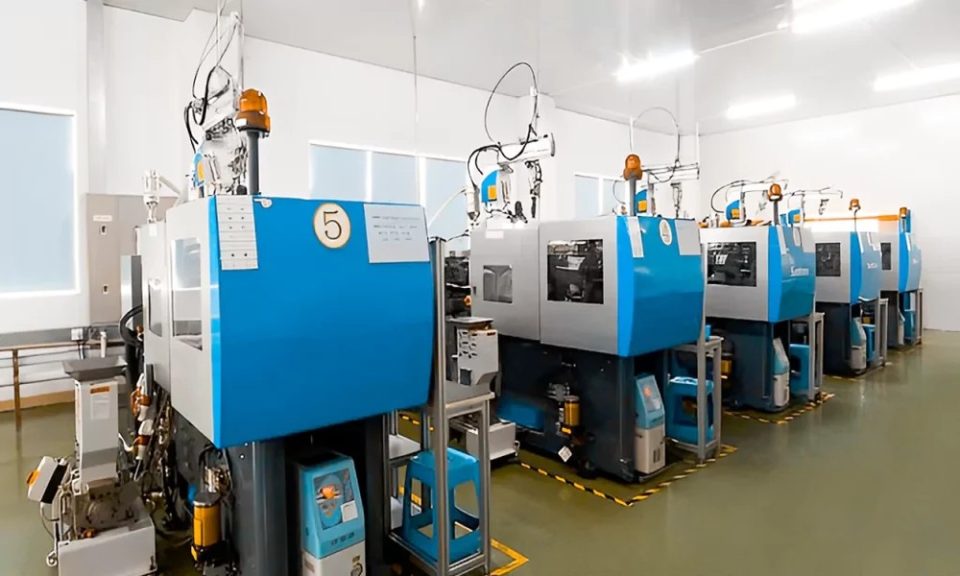
High precision plastic injection molding sits at the intersection of material science, tooling craft, and quality discipline. Nowhere does that intersection carry greater consequence than in the production of medical components. Standard commercial moulding tolerates dimensional variation measured in tenths of a millimetre. Medical device components cannot afford that margin. When a luer connector must seal reliably under clinical pressure, or a microfluidic channel must deliver a fixed reagent volume within a measurable range, the geometry has to be correct every time, at full production volume, across every batch.
Why Medical Components Require a Higher Standard
Medical components produced through injection moulding may end up inside the body, in contact with sterile fluid pathways, or in a surgeon’s hand during a procedure where a device failure carries direct patient consequences. These downstream demands define the upstream specifications. Tolerances for precision plastic moulding for medical parts are typically set at plus or minus 0.01 to 0.05 millimetres on critical features, compared with the plus or minus 0.1 to 0.2 millimetres acceptable in standard commercial work. The tighter the specification, the more the entire production system – tooling, materials, process, and inspection – must align to hold it.
High precision plastic injection molding demands an approach that treats every process variable as a potential patient safety risk rather than simply a production quality metric.
Material Selection in Medical-Grade Plastic Moulding
Material choice in tight-tolerance medical injection moulding begins with biocompatibility. A polymer that performs well mechanically but releases extractables incompatible with biological tissue or drug contact does not qualify for medical use, regardless of its dimensional properties. The selected material also determines the shrinkage behaviour the mould designer must compensate for and the processing window the moulding team must hit on every production run.
The materials most commonly used in medical-grade plastic moulding include:
- PEEK: High mechanical strength, chemical resistance, and biocompatibility for surgical and implantable applications
- Polycarbonate: Optical clarity and impact resistance for transparent housings and luer connectors
- Polysulphone and PPSU: Thermal stability for components requiring repeated autoclave sterilisation
- LCP: Extremely low and predictable shrinkage for fine-pitch connectors and micro-housings
- Polypropylene: Cost-effective performance for lower-risk applications where flexibility is a key requirement
Processing conditions drive dimensional outcome. Inconsistent conditions produce inconsistent parts, and inconsistent parts produce device failures.
Tooling and Mould Design
Precision starts at the tooling stage. A mould built for high precision plastic injection molding of medical components operates to dimensional tolerances that are typically one-third or less of the part tolerances it must produce. Every error built into the tool adds directly to variation in the finished component.
Gate location controls how molten polymer fills the cavity. Poor placement creates weld lines, sink marks, and residual stress patterns that cause dimensional instability in the finished part. Cooling channel design must remove heat evenly to achieve consistent crystallisation across the entire moulded area. Tool steel grade, surface finish, and venting provision all affect part quality over the production life of the mould. None of these elements offer meaningful opportunity for cost reduction without corresponding risk to dimensional consistency.
“In advanced manufacturing, there are no shortcuts. Every step of the process must be done right,” Lee Hsien Loong, former Prime Minister of Singapore, noted when addressing the country’s advanced manufacturing ambitions. In medical moulding, that principle is not aspirational. It is contractual.
Cleanroom Production and Process Validation
Medical injection moulding of components for sterile or implantable devices requires production within classified cleanroom environments. ISO Class 7 facilities control airborne particulate to 352,000 particles per cubic metre at 0.5 microns, which is appropriate for most medical component moulding. Higher-risk applications may require ISO Class 5 conditions.
Regulated medical moulding follows the IQ-OQ-PQ validation sequence. Installation Qualification confirms equipment is installed to specification. Operational Qualification establishes the validated operating range. Performance Qualification demonstrates that the process consistently produces conforming output within those validated parameters. These records form part of the regulatory documentation assembled for device market authorisation.
Statistical process control monitors melt temperature, injection pressure, hold time, and cooling time throughout production runs. Parameter drift is identified before it produces nonconforming components.
Choosing the Right Manufacturing Partner
Selecting a contract manufacturer for precision polymer processing in the medical sector requires documented evidence rather than assurances. Ask for process capability data from programmes of comparable material and geometric complexity. Cpk values above 1.67 on critical dimensions show a process with sufficient headroom to absorb normal production variation without generating nonconformances.
Key indicators of a capable medical moulding partner include:
- ISO 13485 certification covering the specific scope of manufacture requested
- Documented cleanroom classification and ongoing environmental monitoring records
- First article inspection reports with actual measurement data rather than tick-box entries
- Statistical process control applied consistently across production runs
- Validation documentation specific to the process being used, not just the equipment category
Working with a supplier who produces this evidence as standard practice – rather than on request – reduces the risk of process capability gaps appearing after regulatory submission. Precision plastic moulding for medical devices is not an optional premium. For any component where patient safety depends on dimensional accuracy, high precision plastic injection molding is the baseline requirement, and selecting the right partner to deliver it is among the most consequential decisions in medical device development.
