
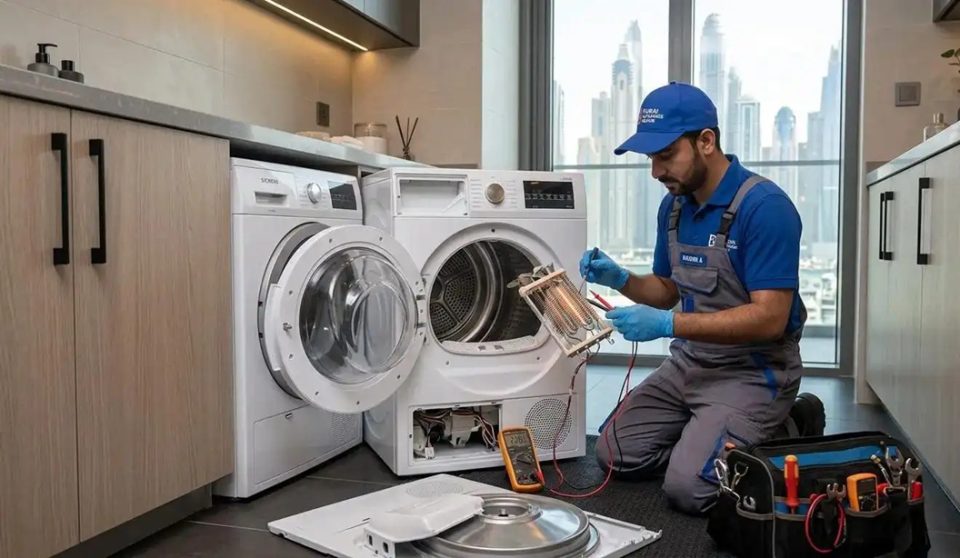
A dryer that spins but fails to produce heat is one of the most common complaints handled by dryer repair Singapore specialists every week. The machine tumbles faithfully, the timer counts down, yet clothes emerge damp and cold. Understanding why heating and drying failures occur – and what can be done about them – puts homeowners in a stronger position to act decisively.
How a Dryer Produces Heat
Before diagnosing faults, it helps to understand the basic mechanism. Electric dryers draw power through a heating element – a coiled wire that glows red-hot when current passes through it. A blower fan pushes air across this element, sending heated air into the rotating drum. Moisture evaporates from the clothes, and the humid air exits through an exhaust vent.
Gas dryers work on a similar principle but use a gas burner and igniter instead of an electric coil. In Singapore, electric models account for the vast majority of household installations, so this guide focuses primarily on electric tumble dryer servicing and repair.
Every component in this chain matters. A failure at any point – the element, the thermostat, the fan, or the vent – disrupts the entire drying process.
Common Causes of Heating Failure
Burnt-out heating element.
The element endures extreme temperatures during every cycle. Over time, the wire develops weak spots and eventually breaks. When this happens, the dryer produces no heat at all. A multimeter test confirms the fault, and replacement typically takes under an hour.
Defective thermostat.
Dryers use one or more thermostats to regulate temperature.
A faulty cycling thermostat may fail to signal the element to switch on, while a blown high-limit thermostat cuts power to the heater permanently as a safety measure. Clothes dryer fix procedures for thermostat issues involve testing each unit and replacing any that show no continuity.
Tripped thermal fuse.
This one-time safety device blows when the dryer overheats, cutting power to the heating circuit. The fuse itself must be replaced, but the underlying cause – usually restricted airflow – must also be addressed to prevent recurrence.
Faulty timer or control board.
In some cases, the electronic controls fail to send voltage to the heating circuit. This is less common but worth investigating if the element, thermostats, and fuse all test correctly.
Why Clothes Take Too Long to Dry
Even when the dryer produces heat, drying times can stretch far beyond normal. The following factors are responsible for most laundry dryer maintenance calls related to slow drying:
Clogged Lint Filter
A filter packed with lint restricts airflow dramatically. Clean it after every load without exception.
Blocked Exhaust Vent
Lint accumulates in the vent hose and external duct over months. A fully blocked vent traps moisture inside the drum.
Overloaded Drum
Cramming too many items into a single load prevents hot air from circulating between garments.
Worn Drum Seals
Gaps around the drum allow heated air to escape into the cabinet rather than passing through the clothes.
Defective Blower Fan
If the fan cannot push sufficient air volume, drying efficiency drops sharply.
Mr Lim Kah Seng, a veteran appliance engineer who has serviced dryers across Singapore for nearly two decades, offers this perspective: “Nine times out of ten, when someone tells me their dryer takes two hours to dry a single load, I find a vent so packed with lint that barely any air gets through. The fix takes ten minutes. The prevention takes ten seconds after each cycle.”
Step-by-Step Troubleshooting Guide
Homeowners comfortable with basic checks can narrow down the problem before calling a technician:
- Check the power supply. Ensure the dryer receives full voltage. Electric dryers in Singapore typically require a dedicated circuit.
- Clean the lint filter. Remove all visible lint and rinse the filter under water if fabric softener residue has created a film.
- Inspect the exhaust vent. Disconnect the hose from the back of the dryer and check for blockages. Run the dryer briefly to confirm strong airflow from the vent exit.
- Test the heating element. With the dryer unplugged, use a multimeter to check for continuity across the element terminals. An open circuit confirms a break.
- Examine the thermostats and thermal fuse. These small components sit near the heating element or exhaust path. Test each for continuity.
If these checks reveal nothing obvious, the issue likely lies within the control electronics – a job best left to a qualified dryer repair Singapore technician.
Professional Repair vs DIY
Replacing a lint filter or clearing an exhaust vent is well within most homeowners’ capabilities. Heating element replacement, while straightforward mechanically, involves working near high-voltage wiring and demands caution. Thermostat and control board repairs require diagnostic equipment and electrical knowledge.
In Singapore, engaging a licensed technician for anything beyond basic maintenance is both safer and often more economical. A professional carries the correct replacement parts, completes the work in a single visit, and provides a warranty on the repair. Attempting complex fixes without proper training risks further damage – or worse, a safety hazard.
Preventing Future Heating Problems
Consistent maintenance prevents the vast majority of heating and drying failures:
- Clean the lint trap after every load.
- Schedule professional vent cleaning annually.
- Avoid running the dryer on maximum heat unnecessarily.
- Replace worn seals and gaskets before they allow heat to escape.
- Ensure the dryer sits in a well-ventilated space.
A dryer that heats properly and dries efficiently is not a matter of luck. It is the result of attentive care and timely intervention. When heating issues do arise, swift action and skilled dryer repair Singapore professionals restore your appliance to full working order, keeping your household routine on track.
