
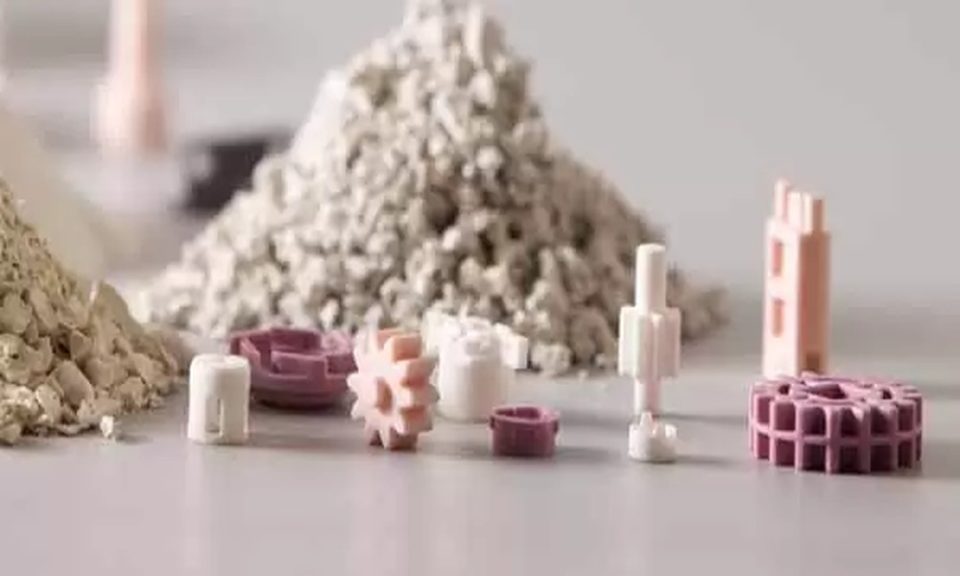
What Ceramic Injection Molding Produces
Ceramic injection molding is a manufacturing process that applies the injection moulding approach to ceramic materials, producing complex net-shape ceramic components with dimensional tolerances and geometric freedom that conventional ceramic forming methods cannot achieve. Standard ceramic shaping processes such as dry pressing, slip casting, and extrusion are limited in the geometries they can produce economically. Ceramic injection moulding removes those geometric constraints by blending fine ceramic powder with a thermoplastic binder to form a feedstock that flows under pressure into a precision mould, then processing the shaped part through debinding and sintering to yield a dense, finished ceramic component.
The Materials Processed Through Ceramic Injection Molding
Ceramic injection molding processes a range of technical ceramic materials selected for their performance properties. Alumina, or aluminium oxide, is the most widely processed ceramic material in injection moulding, valued for its combination of high hardness, good electrical insulation, wear resistance, and chemical stability across a wide temperature range. Zirconia provides higher fracture toughness than alumina and is used for cutting tool inserts, dental restorations, and components requiring both hardness and resistance to chipping. Silicon nitride combines high strength, low thermal expansion, and excellent high-temperature performance for demanding structural and thermal applications.
Hydroxyapatite, a calcium phosphate ceramic with a composition similar to bone mineral, is processed through ceramic injection moulding for biomedical applications including bone graft substitutes and surface coatings for implantable devices.
Why Ceramic Components Are Specified Over Metals
Precision ceramic component manufacturing produces components chosen for properties that metals cannot provide. Electrical insulation is the most common reason to specify ceramic over metal: alumina, for example, has an electrical resistivity of approximately 10 to the power of 14 ohm-centimetres, making it an effective insulator in applications where metals would conduct. Hardness of 9 on the Mohs scale for alumina and 8.5 for zirconia provides wear resistance that extends component life in abrasive environments. Chemical inertness across a wide pH range makes ceramics suitable for chemical processing equipment where metals would corrode.
“Singapore’s advanced manufacturing sector has demonstrated that technical ceramics can meet the most demanding industrial specifications,” the Economic Development Board noted in its advanced materials industry analysis, reflecting the sector’s growing role in high-value production.
The Ceramic MIM Process Sequence
Ceramic injection moulding process follows the same four-stage sequence as metal MIM but with parameters tailored to the different thermal and chemical properties of ceramic materials. Feedstock preparation blends fine ceramic powder with a binder system – typically a wax or polymer-based formulation – to achieve the flow characteristics needed for consistent mould filling. Injection moulding produces the green part in the mould cavity under controlled temperature and pressure. Debinding removes the binder, either through solvent extraction, catalytic methods, or staged thermal treatment, depending on the binder system used. Sintering at temperatures typically between 1,400 and 1,600 degrees Celsius densifies the ceramic body to near-theoretical density.
Shrinkage during sintering typically runs between 20 and 25 percent linearly for alumina, which must be precisely compensated in the tool design.
Dimensional Control in Ceramic Injection Molding
Ceramic injection molded parts achieve dimensional tolerances in the range of plus or minus 0.3 to 0.5 percent of nominal dimensions as sintered. The higher shrinkage of ceramic materials compared to metal MIM makes shrinkage prediction accuracy especially important; errors in shrinkage compensation produce systematic dimensional deviation that requires tool modification to correct. On non-critical surfaces, as-sintered tolerances are often sufficient. On critical functional surfaces – sealing faces, mating bores, and precision bearing surfaces – grinding or lapping operations after sintering bring dimensions within the tighter bands that the application requires.
Applications for Ceramic Injection Molded Components
High performance ceramic component production serves applications across electronics, medical devices, and industrial systems. Electronics applications include substrates, insulators, and feed-through components where electrical insulation, dimensional precision, and thermal stability are all required. Medical device applications include components for minimally invasive instruments, wear surfaces in hip and knee implants, and dental restorations where hardness, biocompatibility, and aesthetic properties must coexist. Industrial applications include wear-resistant pump components, cutting inserts, and nozzle bodies where hardness and chemical resistance extend service life.
Why Ceramic MIM Competes with Alternative Shaping Methods
Ceramic injection molding offers advantages over dry pressing, slip casting, and machining of ceramic blanks when the required geometry includes internal features, undercuts, or complex external profiles that other methods cannot produce as efficiently. Dry pressing produces simple shapes but cannot achieve hollow internal geometry or complex profiles. Machining of sintered ceramic blanks is possible but slow and expensive due to the material’s hardness, and it generates significant waste. CIM produces the near-net shape in a single moulding operation, with machining limited to critical surfaces only.
Ceramic injection molding delivers high performance technical parts with the geometric complexity and dimensional accuracy that demanding engineering applications require.
